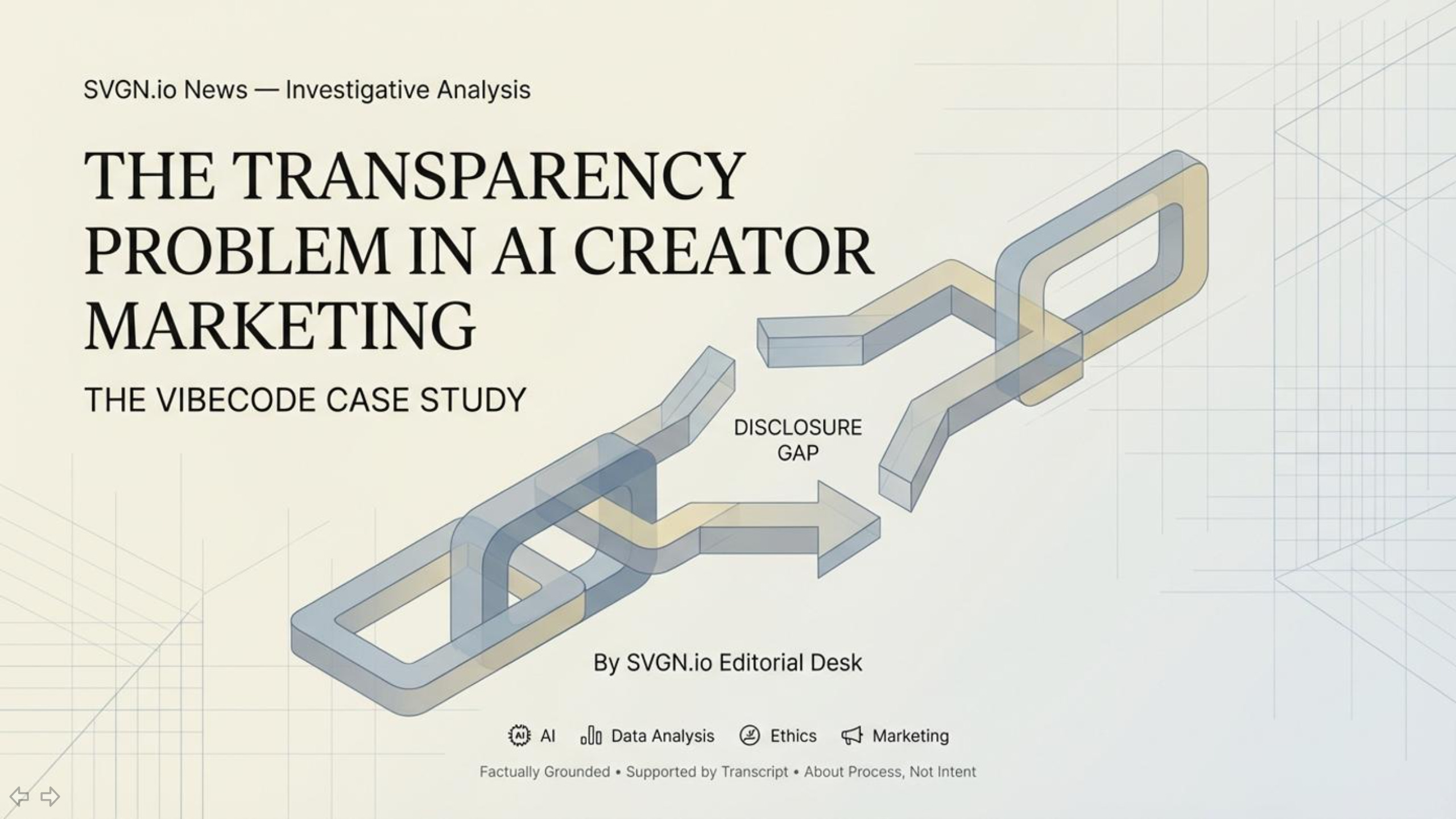
A new generation of “AI creators” is reshaping how software is marketed. But with that shift comes a growing ethical fault line: when education quietly becomes undisclosed self-promotion. Few cases illustrate this better than the rise of VibeCode and its most visible evangelist, Riley Brown.
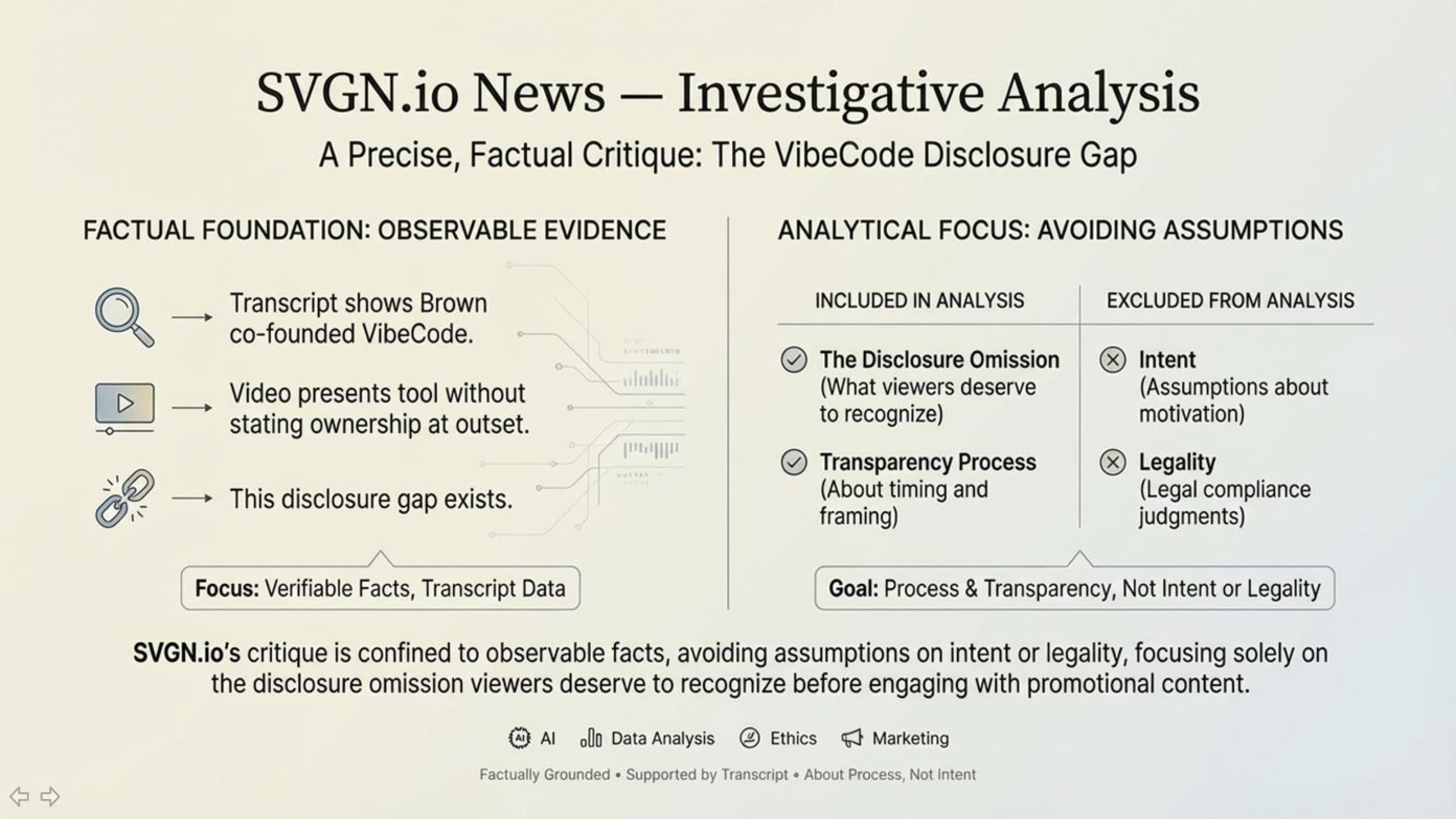
This article examines a simple, verifiable question: Did viewers receive clear, upfront disclosure that the tool being taught was created by the teacher himself?
The answer, based on the primary source, is no.
Why Viewers Don’t Actually Need VibeCode for What’s Being Shown
Before addressing disclosure, it’s important to clarify a separate but related point: nothing demonstrated in the video requires VibeCode specifically.
The workflows shown—“vibe coding” via natural-language prompts, rapid prototyping, app scaffolding, UI generation, and iterative debugging—are capabilities of modern AI coding models, not proprietary features unique to VibeCodeApp.com.
At a technical level, the video relies on:
Natural-language code generation
Agent-style iterative refinement
Frontend scaffolding (e.g., Next.js / web stacks)
API usage and deployment patterns
All of these are already available through general-purpose AI coding models such as Gemini and Claude, or through open-source stacks paired with top-tier open models like GLM-4.7. In many cases, these tools offer greater transparency, flexibility, and user control without requiring a proprietary wrapper or centralized platform.
In other words, VibeCode does not introduce a new capability—it packages existing model functionality behind a branded interface. Viewers could reproduce the same results using standard AI coding tools, local or cloud-based environments, or open-source workflows, often with fewer constraints.
This distinction matters because it reframes the video’s persuasive structure: the product is presented as necessary to participate in “vibe coding,” when in reality it is optional infrastructure layered on top of widely available technology.
Understanding that context makes the disclosure issue clearer. When a founder promotes a proprietary platform as the default path to capabilities that already exist elsewhere, transparency about that relationship becomes even more important.
What the Video Presents Itself As
The opening of Riley Brown’s long-form “vibe coding” video is framed as neutral education:
“The most comprehensive video on vibe coding”
A beginner-friendly, tool-agnostic tutorial
An industry overview designed to help viewers “catch up”
The tone is instructional, exploratory, and positioned as discovery content—not advertising. Viewers are invited to learn, not to buy.
Yet from the very beginning, the audience is repeatedly directed to VibeCodeApp.com, encouraged to sign up, and shown workflows that default to the Vibe Code app—without any upfront disclosure that Brown is a founder of the company behind the tool.
This framing is not an interpretation; it is directly observable in the transcript of the video itself.
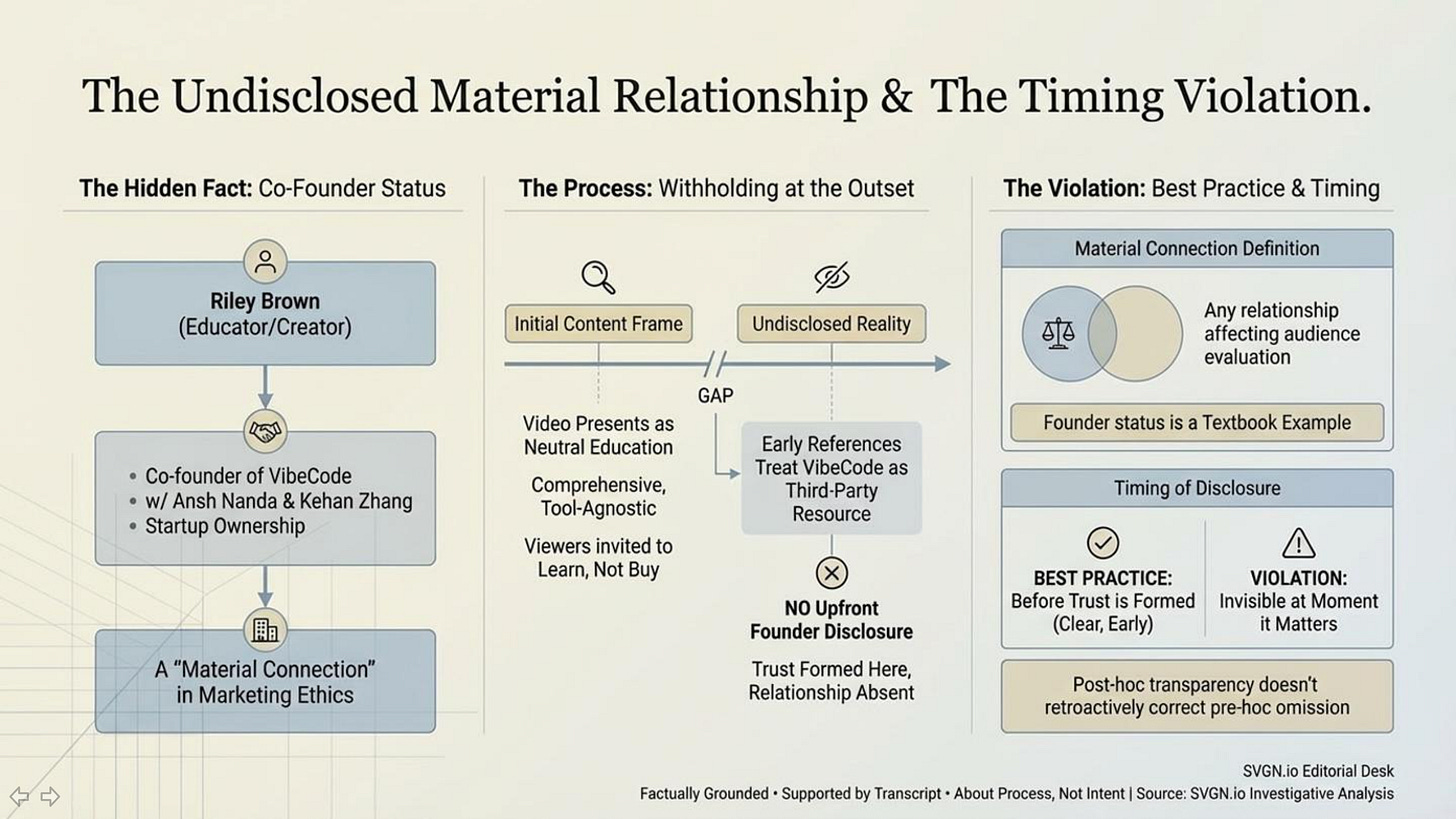
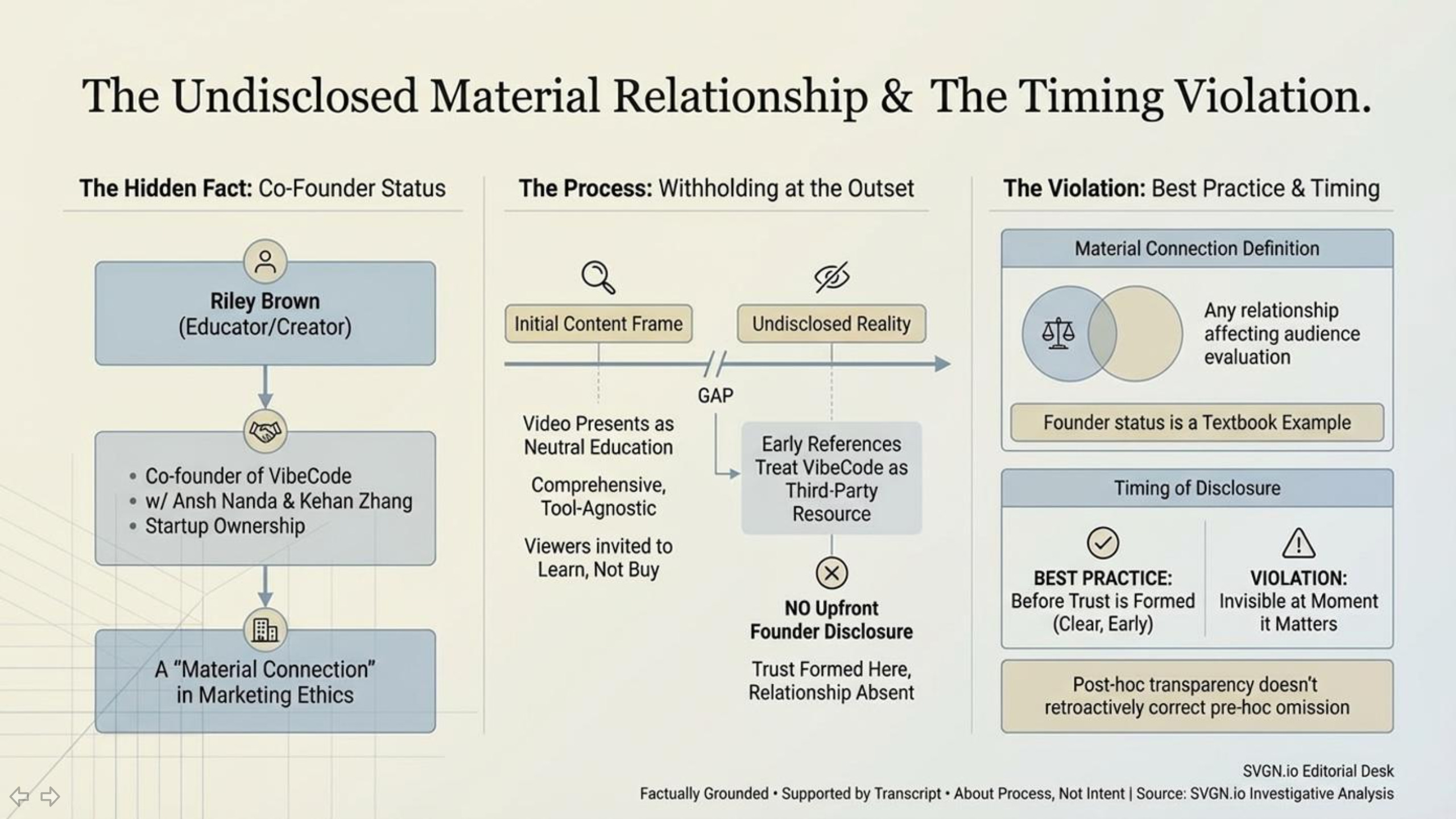
The Undisclosed Material Relationship
What viewers are not told at the start:
Riley Brown is a co-founder of VibeCode
The company was co-founded with Ansh Nanda and Kehan Zhang
The product being demonstrated is not third-party software—it is his own startup
As the video progresses, Brown refers casually to:
“my app”
“what we’re building”
internal roadmap details
templates and features not available elsewhere
But by that point, the framing damage is already done. The viewer has been conditioned to treat the content as independent instruction.
Why This Matters (And Why It’s Not a Nitpick)
This is not about whether VibeCode is useful. This is not about whether founder-led marketing is allowed. This is about disclosure symmetry.
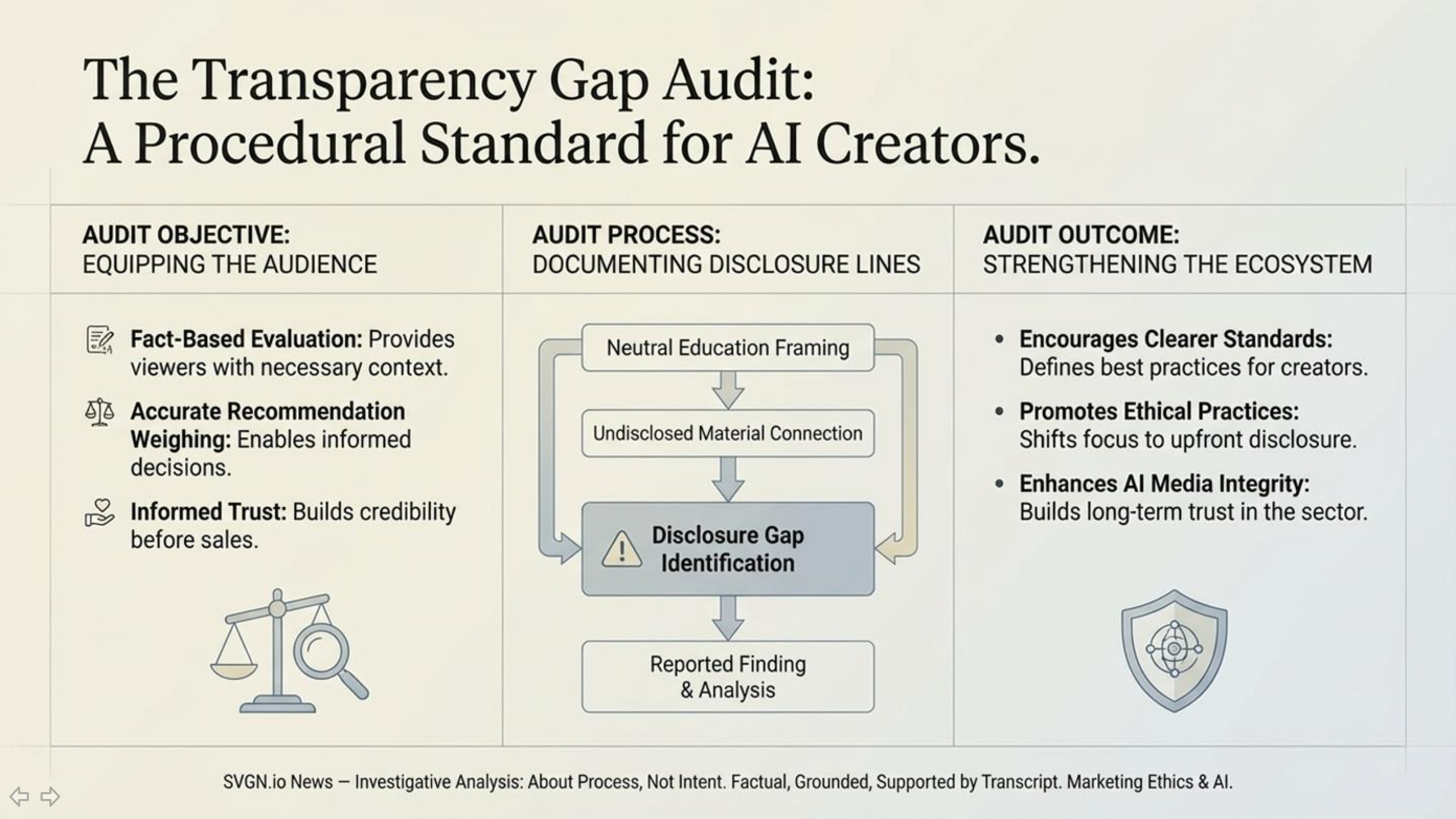
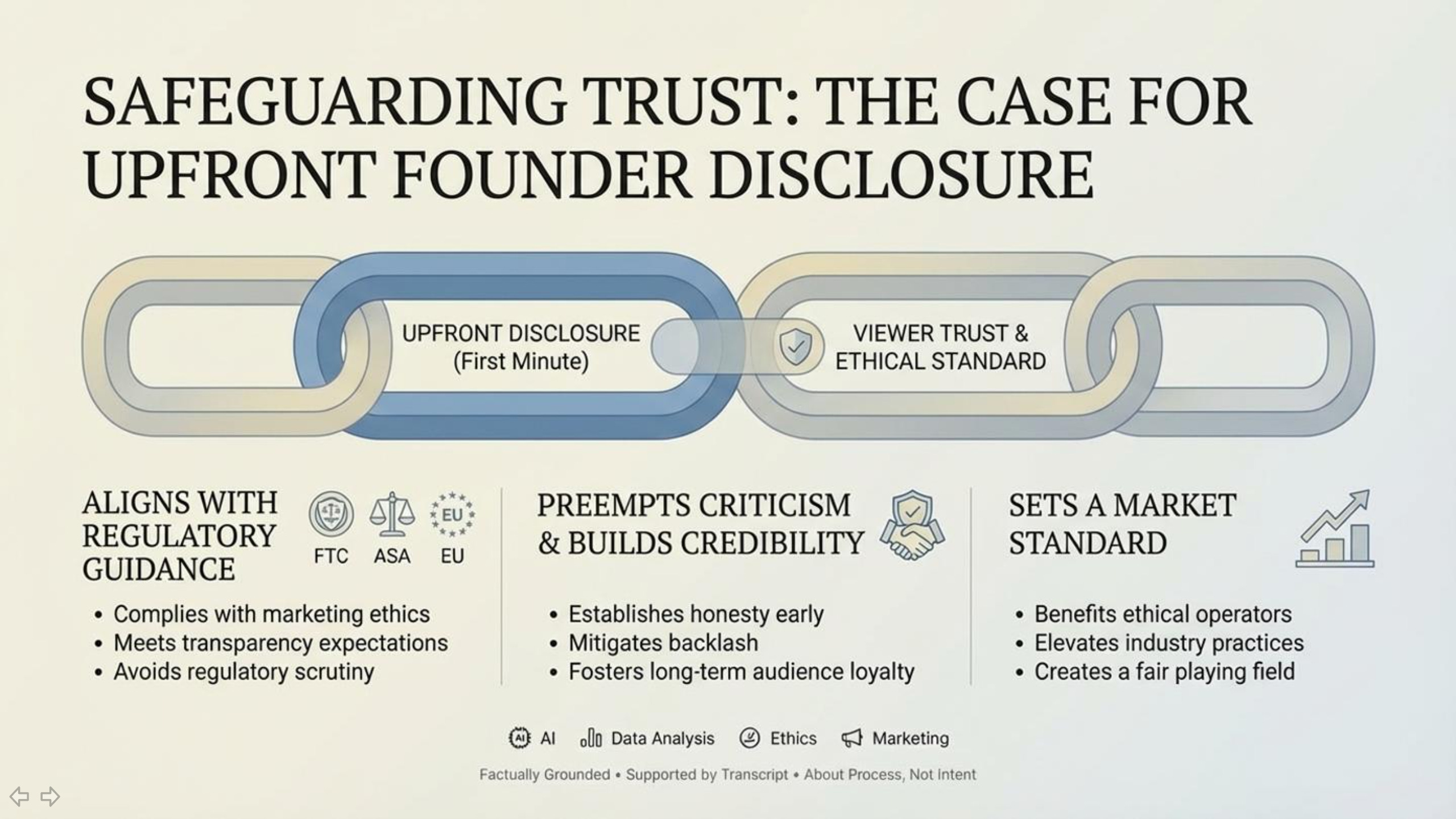
In marketing ethics, a material connection is any relationship that could reasonably affect how an audience evaluates a recommendation. Founder status is the textbook definition of a material connection.
Best practice—across journalism, advertising, and regulatory guidance—is clear:
If the audience would not reasonably expect the relationship, it must be disclosed clearly, early, and unambiguously.
Not in a LinkedIn bio. Not implied halfway through a two-hour video. Not clarified only after a funding announcement.
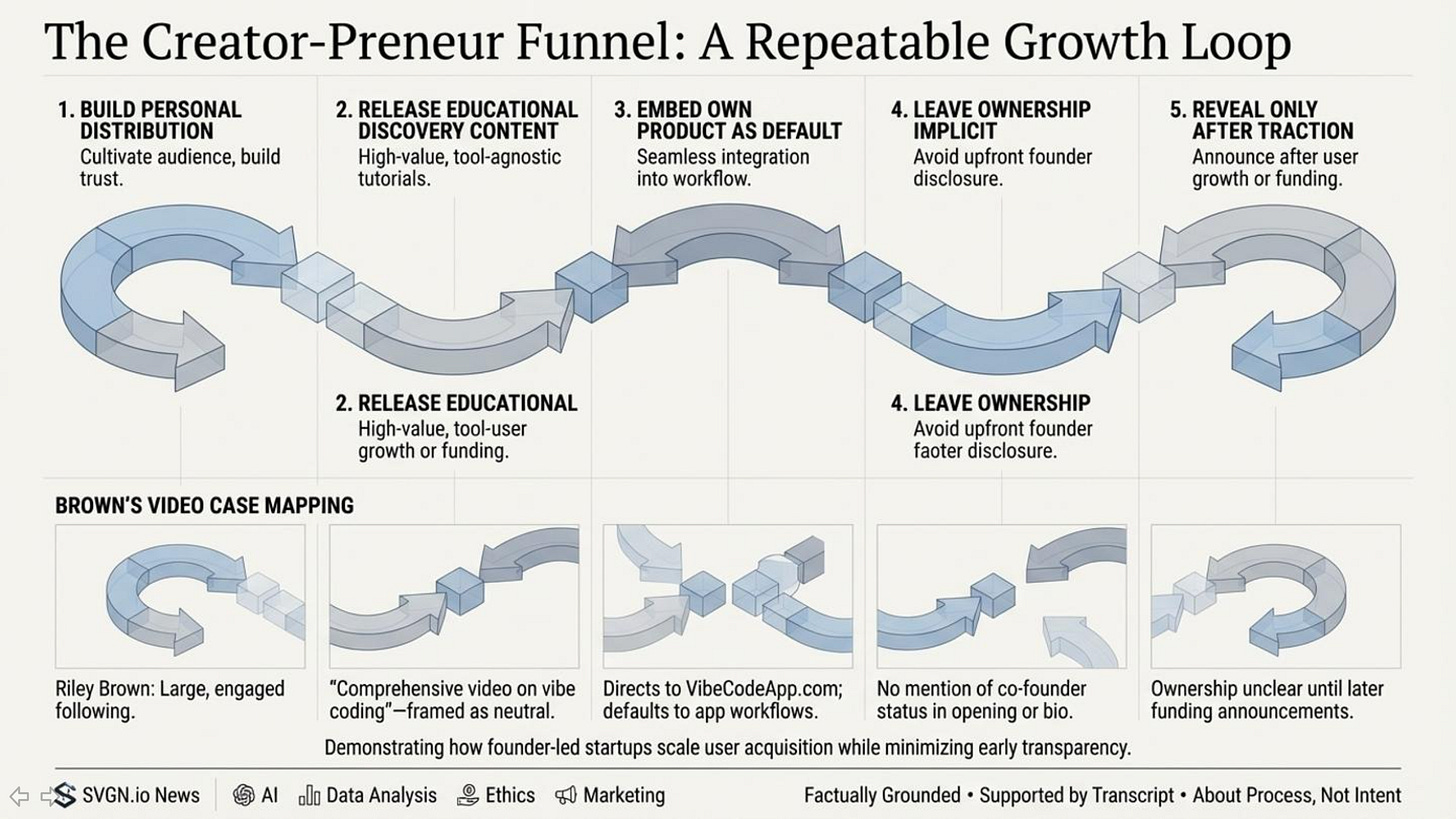
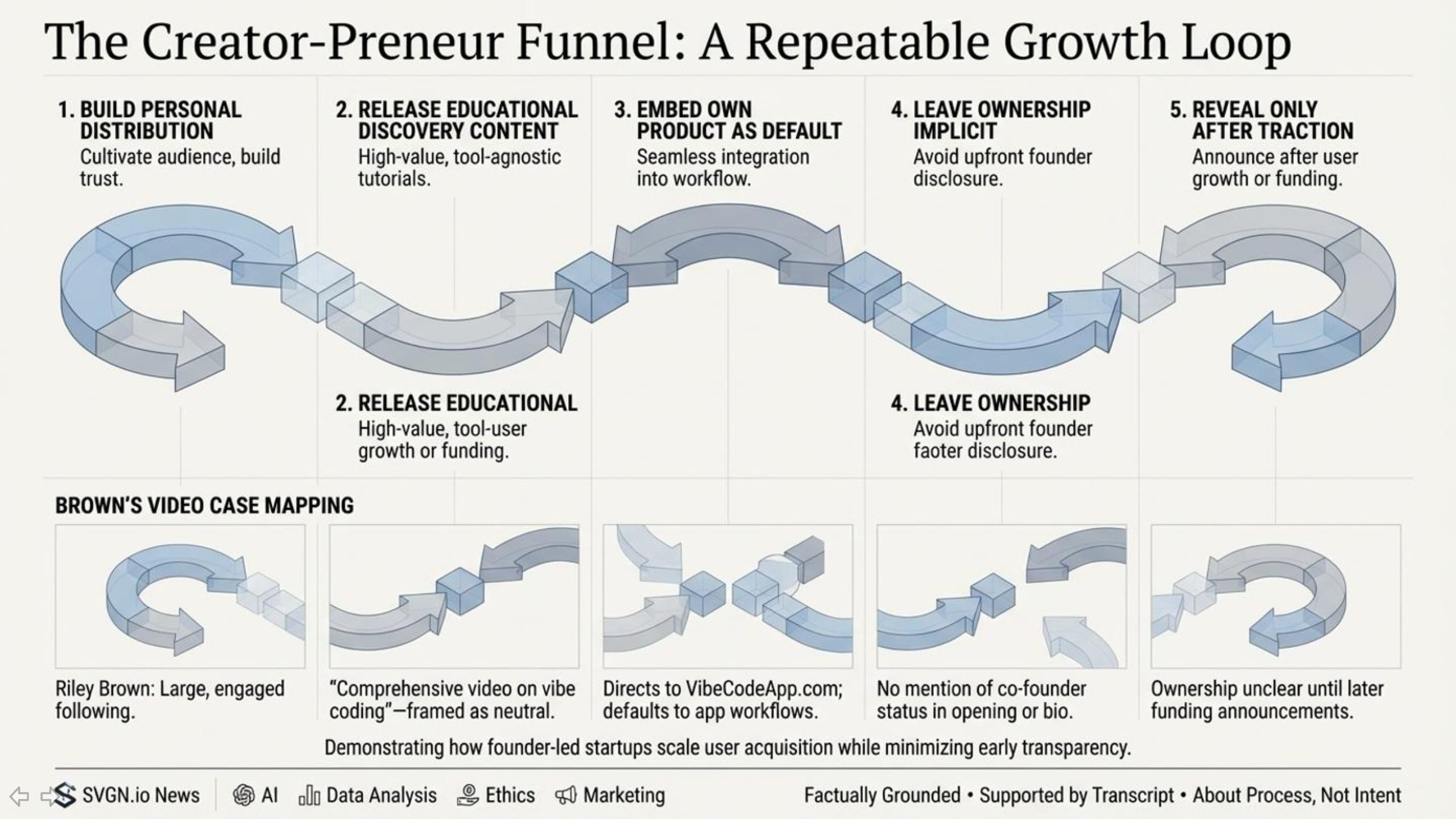
The “Creator-Preneur Funnel” in Plain Sight
Business analysts increasingly describe this strategy as the future of startup growth:
Build massive personal distribution
Create educational or “discovery” content
Embed your own product as the default solution
Allow founder status to remain implicit
Reveal ownership only after traction or funding
In August 2025, VibeCode announced a $9.4M seed round led by Alexis Ohanian’s venture fund. After that moment, founder roles became clearer across professional profiles.
But post-hoc transparency does not retroactively correct pre-hoc omission—especially when the content remains live, evergreen, and algorithmically promoted.
Why Late Disclosure Is Not Enough
Some defenders argue:
“He lists co-founder in his bio now.”
That misses the point.
Videos function as standalone artifacts. They reach viewers who:
Never click bios
Never follow on LinkedIn
Never see later clarifications
For those viewers, the video is the disclosure environment. And in that environment, the material relationship is absent at the moment it matters most: before trust is established.
A Precise, Factual Critique
Here is the narrow claim SVGN.io is making—no more, no less:
Riley Brown is a co-founder of the Vibe Code app. In at least one flagship “vibe coding” tutorial, that relationship is not disclosed at the outset, despite the content being framed as neutral education and repeatedly directing viewers to use and sign up for the product. This constitutes a disclosure gap that viewers deserve to be aware of.
That statement is:
Factually grounded
Supported by the transcript of the youtube video and the same twitter video
This isn’t a tutorial — it’s founder marketing without upfront disclosure.
Riley Brown co-founded VibeCode, yet the video presents itself as neutral education while repeatedly directing viewers to sign up for the product. That disclosure gap matters, regardless of whether the tool itself works.
More importantly, viewers should understand this: you don’t need VibeCode for anything shown in the video. The same results can be achieved using general-purpose AI coding models like Gemini or Claude, or by going fully open-source with models such as GLM-4.7, currently the strongest open-source coding model available.
Education is valuable. Tools are valuable. But trust depends on transparency — and when education quietly becomes a sales funnel, that line deserves to be called out.
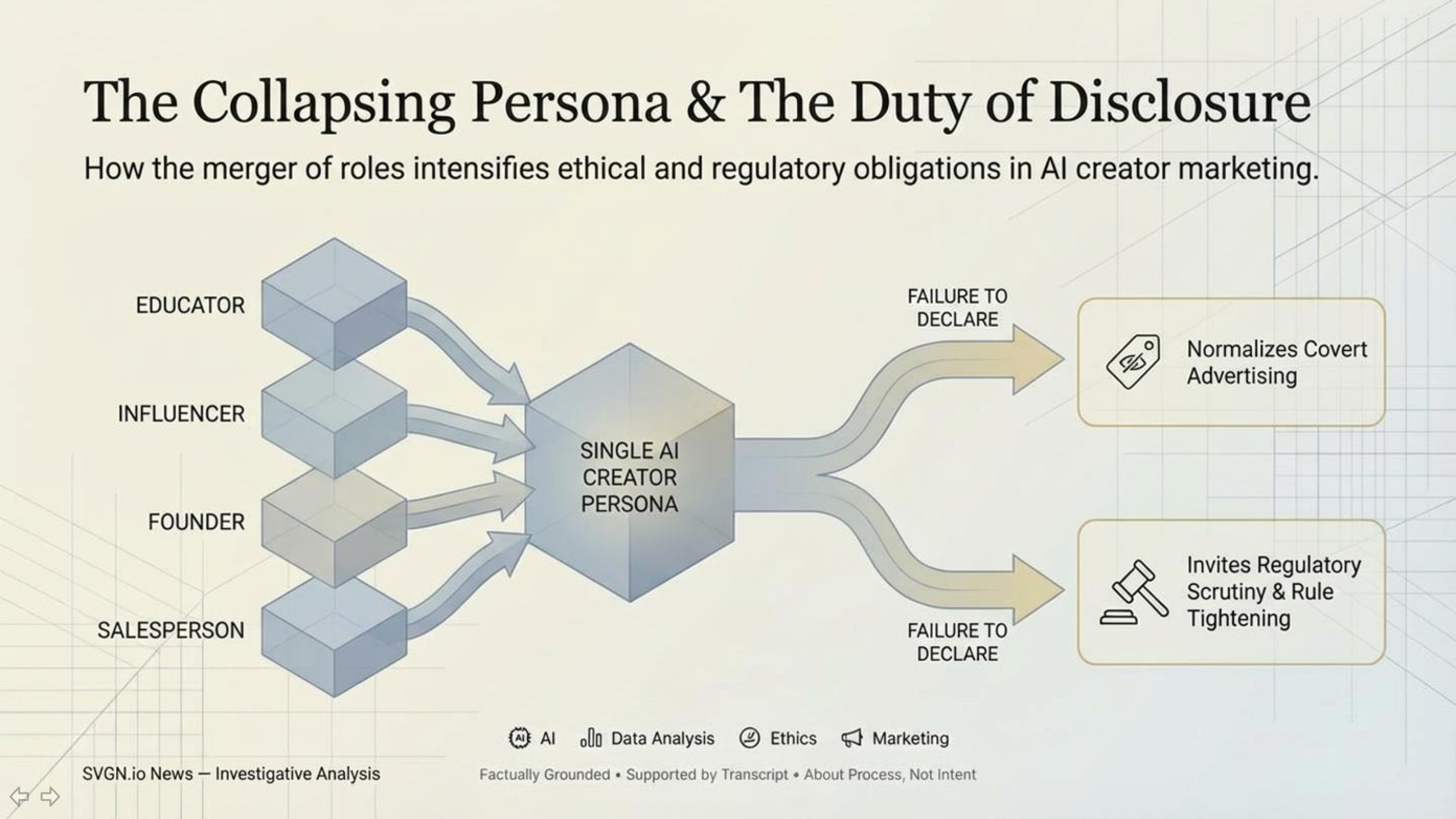
The Bigger Picture for AI Media
As AI tools explode in popularity, the line between:
educator
influencer
founder
salesperson
is collapsing.
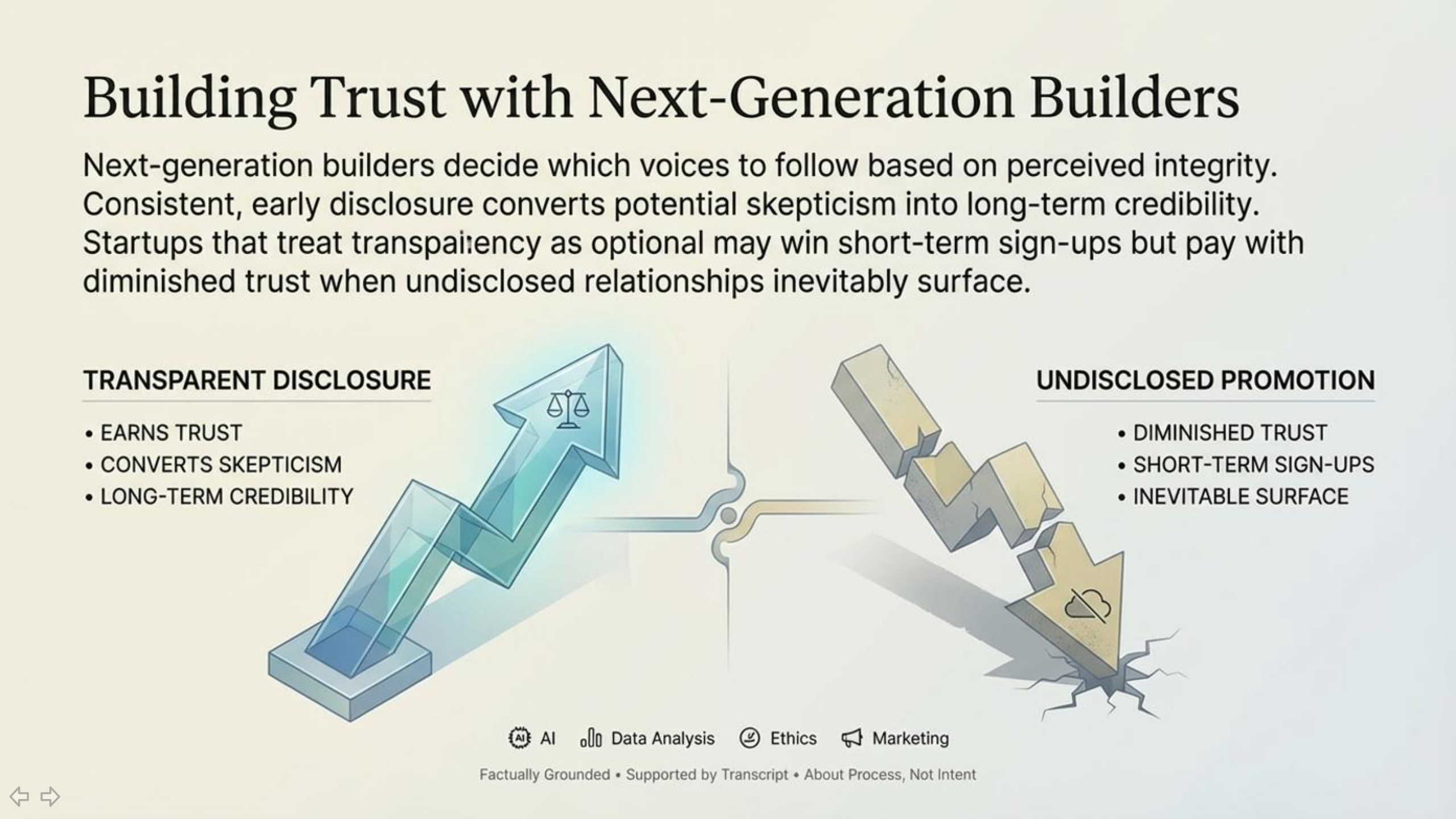
That collapse makes disclosure more important than ever, not optional.
If creator-led startups want the trust of the next generation of builders, the rule is simple:
Say who you are—before you sell what you built.
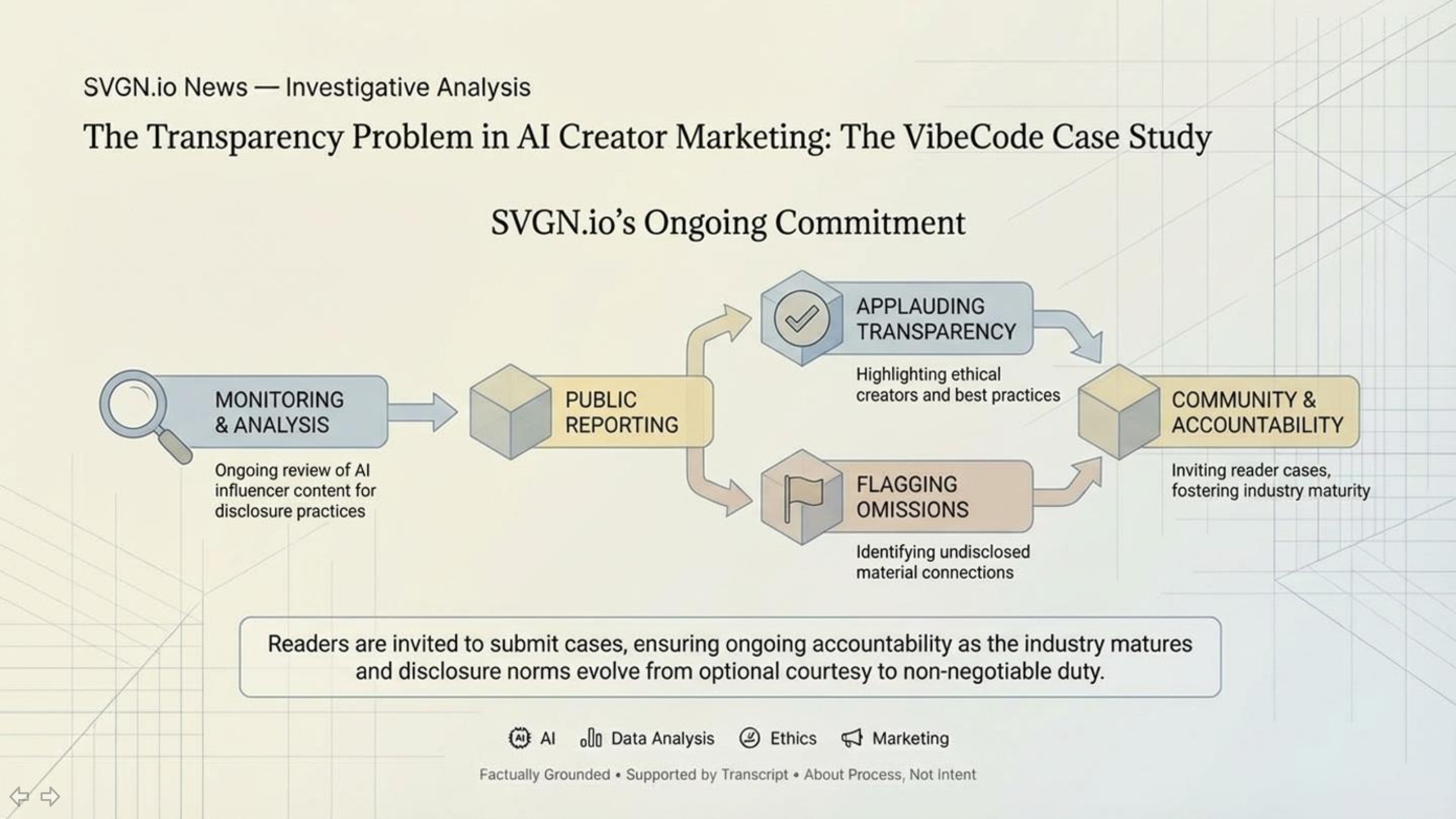
SVGN.io will continue to document where that line is respected—and where it quietly disappears.
SVGN.io News is committed to independent analysis of science, technology, and emerging power structures in the AI era.


 Rohit Ghumare@ghumare64Instead of watching a 2-hour movie, watch this masterclass on Claude code and thank me later.3:31 PM · Dec 27, 2025 · 475K Views56 Replies · 1K Reposts · 6.21K Likes