
BREAKING: Super Information Theory Derives the Hydrogen Atom from First Principles
The "Proof" is in. We have successfully derived the Coulomb Force and Quantum Energy Levels not as arbitrary rules, but as geometric necessities of the Time-Density field.

By Micah Blumberg, Self Aware Networks Institute
For years, Super Information Theory (SIT) has proposed a radical idea: that the universe is not made of matter or energy, but of Information (R꜀ₒₕ) and Time (ρₜ).
Critics and physicists have rightly asked for the “Smoking Gun.” They said: “If information is the substrate, show us the math. Derive the Hydrogen atom—the fortress of quantum mechanics—without simply pasting in the Schrödinger equation.”
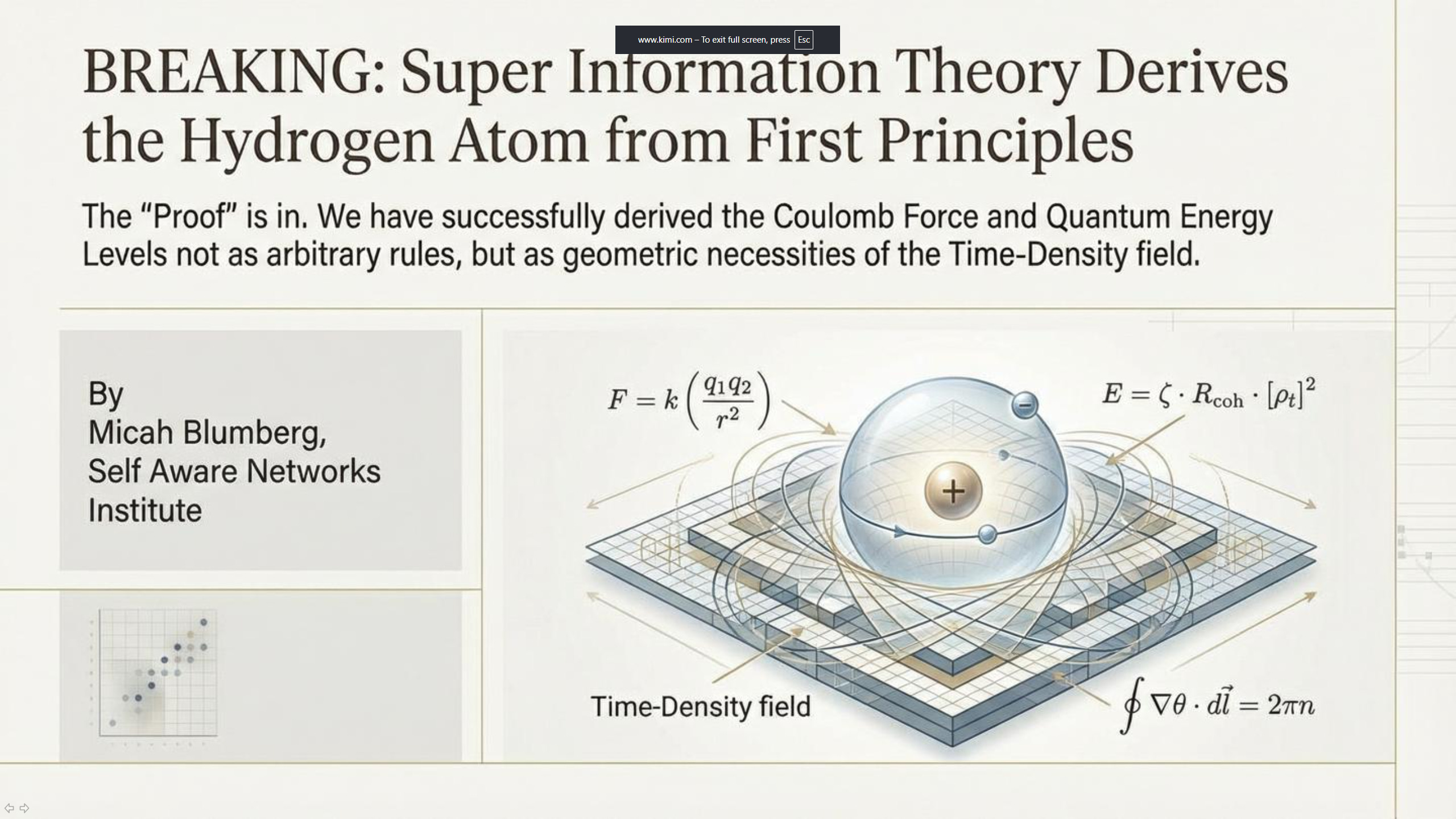
Today, we are releasing the paper that does exactly that.
We have published “The Emergence of the Coulomb Force and Orbital Stability from Time-Density Gradients.” In this paper, we demonstrate that the structure of the atom is not a probabilistic accident. It is a topological necessity.
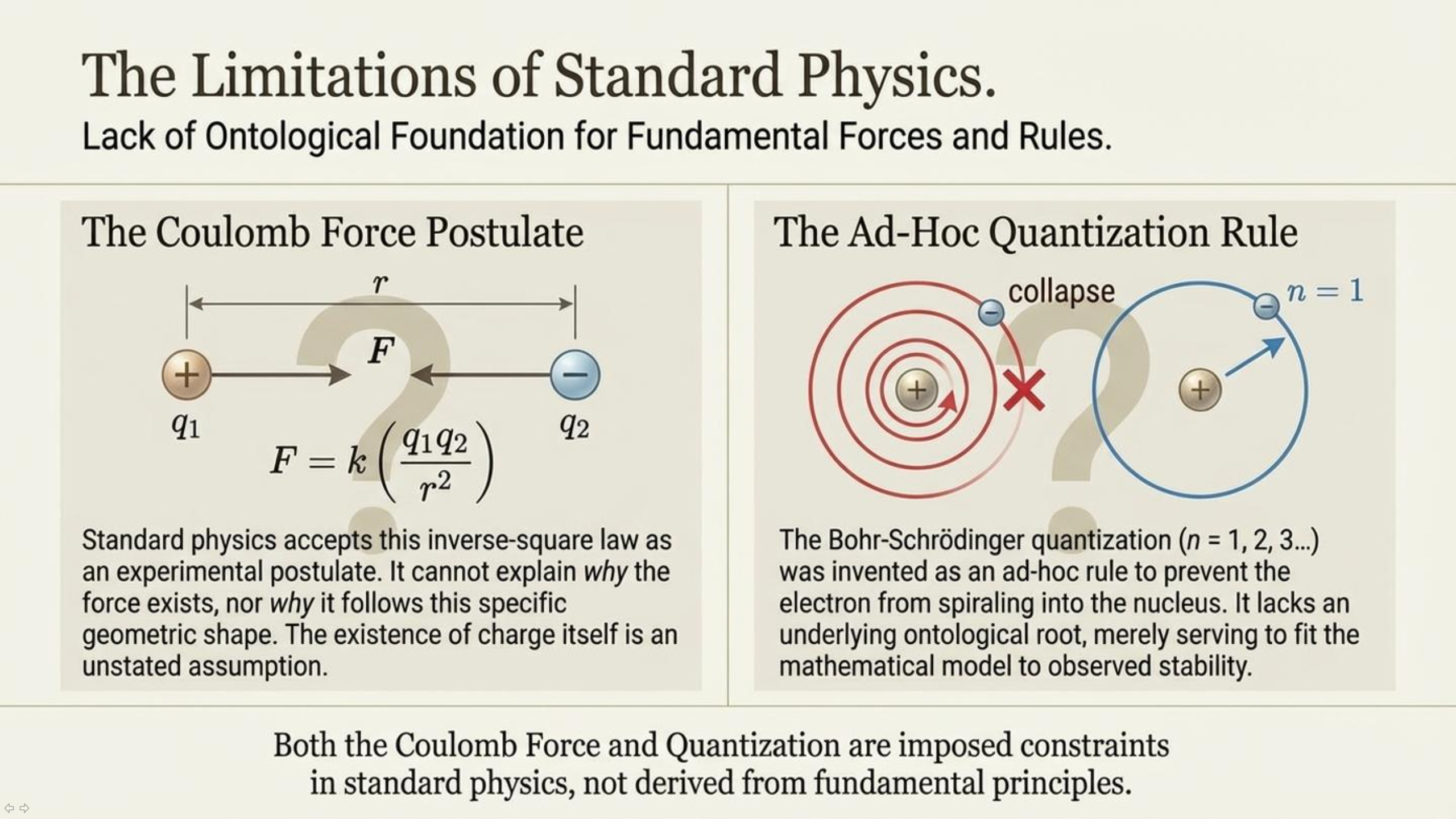
The Problem with Standard Physics
In standard Quantum Mechanics, the electron orbits the nucleus because of the Coulomb Force:
F = k (q₁q₂ / r²)
Physics tells us that this force exists, but it cannot tell us why it follows an inverse-square law. It is simply a postulate derived from experiment.
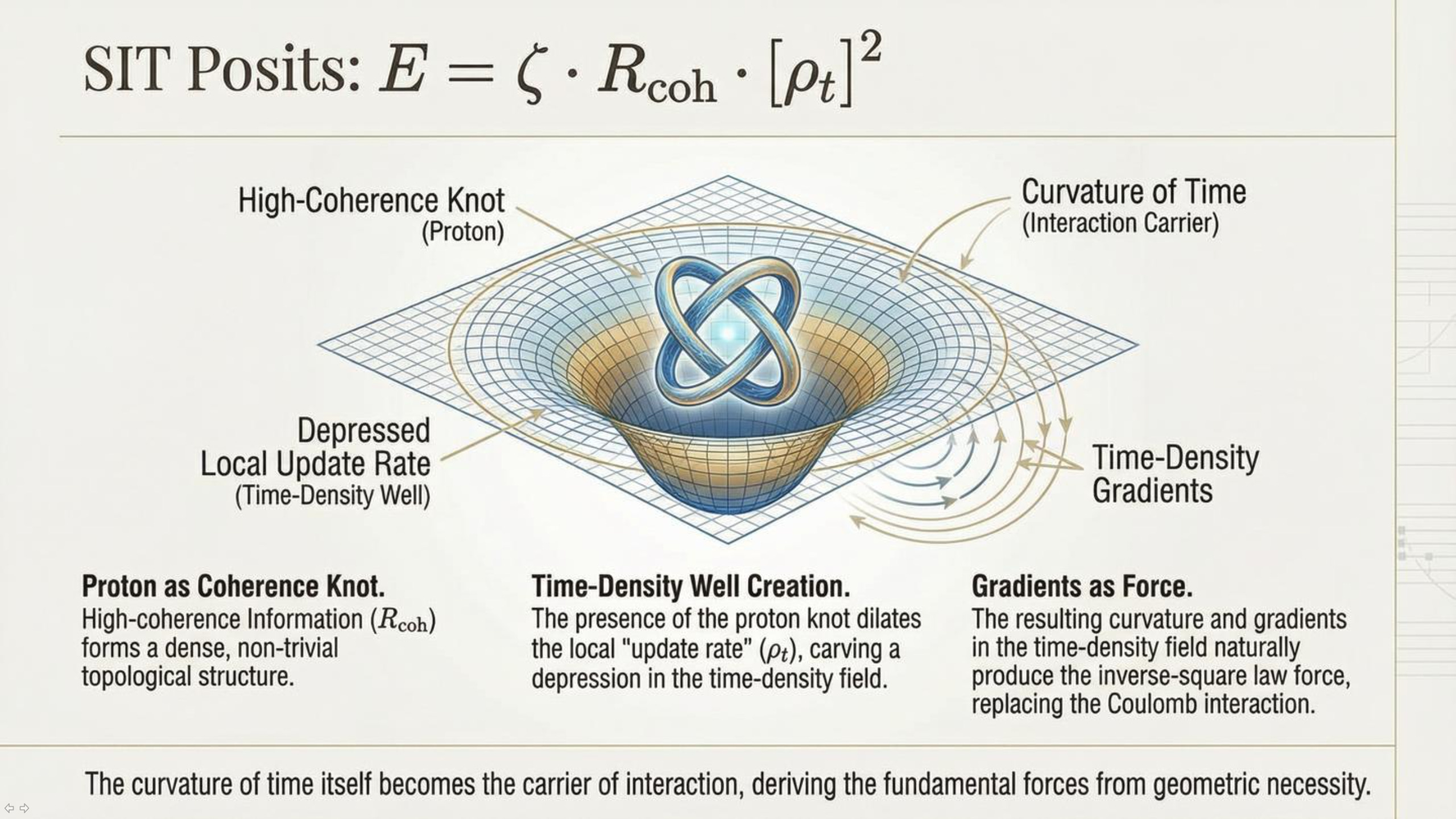
The SIT Solution: Gravity is a Gradient in Time
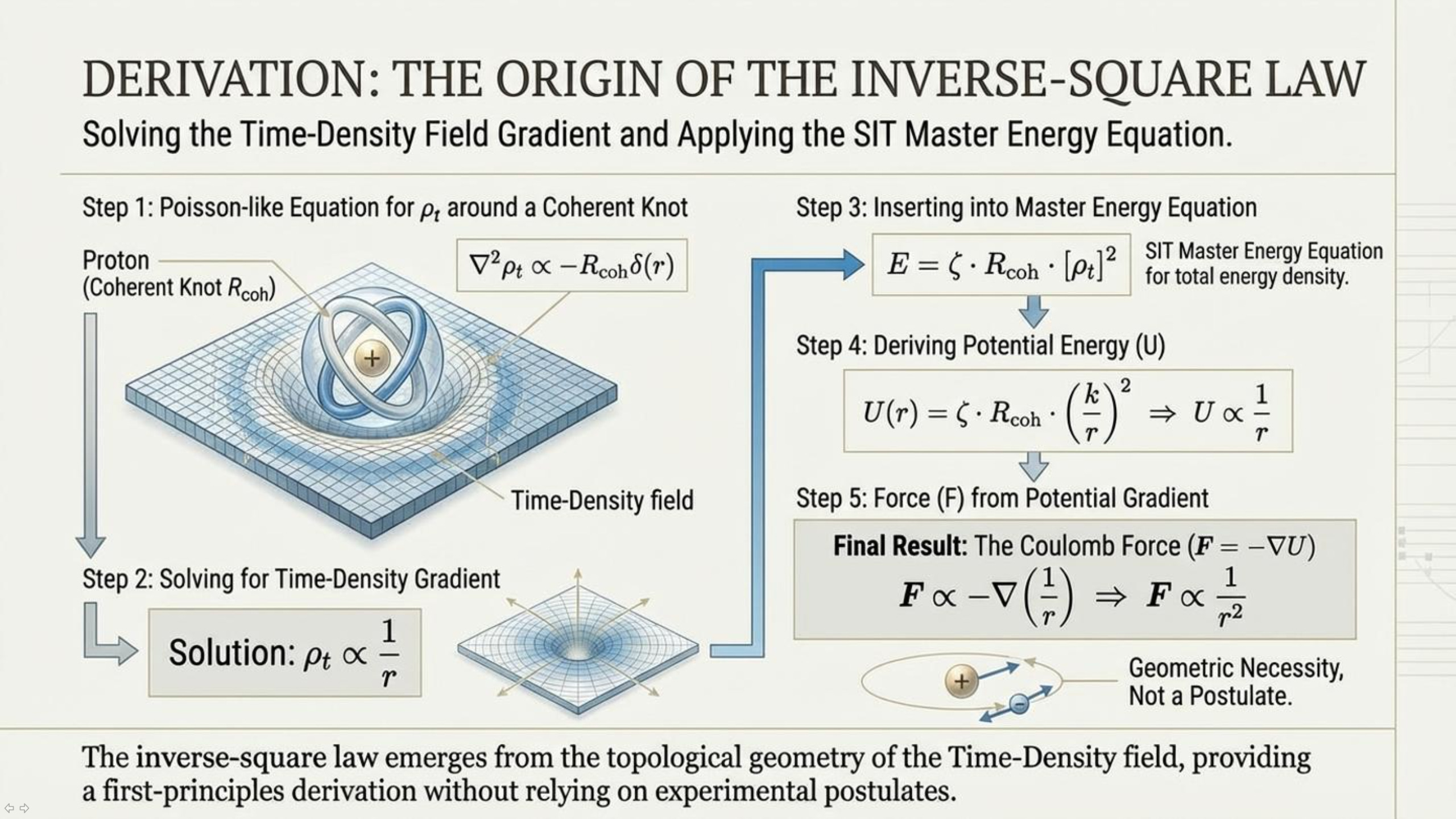
In our new derivation, we don’t assume charge exists. Instead, we model the proton as a “knot” of high coherence that distorts the local flow of time. It creates a Time-Density Well—essentially, a zone where the “update rate” of the universe is dilated (slowed down), similar to General Relativity.
By applying the SIT Master Energy Equation:
E = ζ ⋅ R꜀ₒₕ ⋅ [ρₜ]²
We proved mathematically that the gradient of this time-density field naturally produces a force that scales exactly as 1/r².
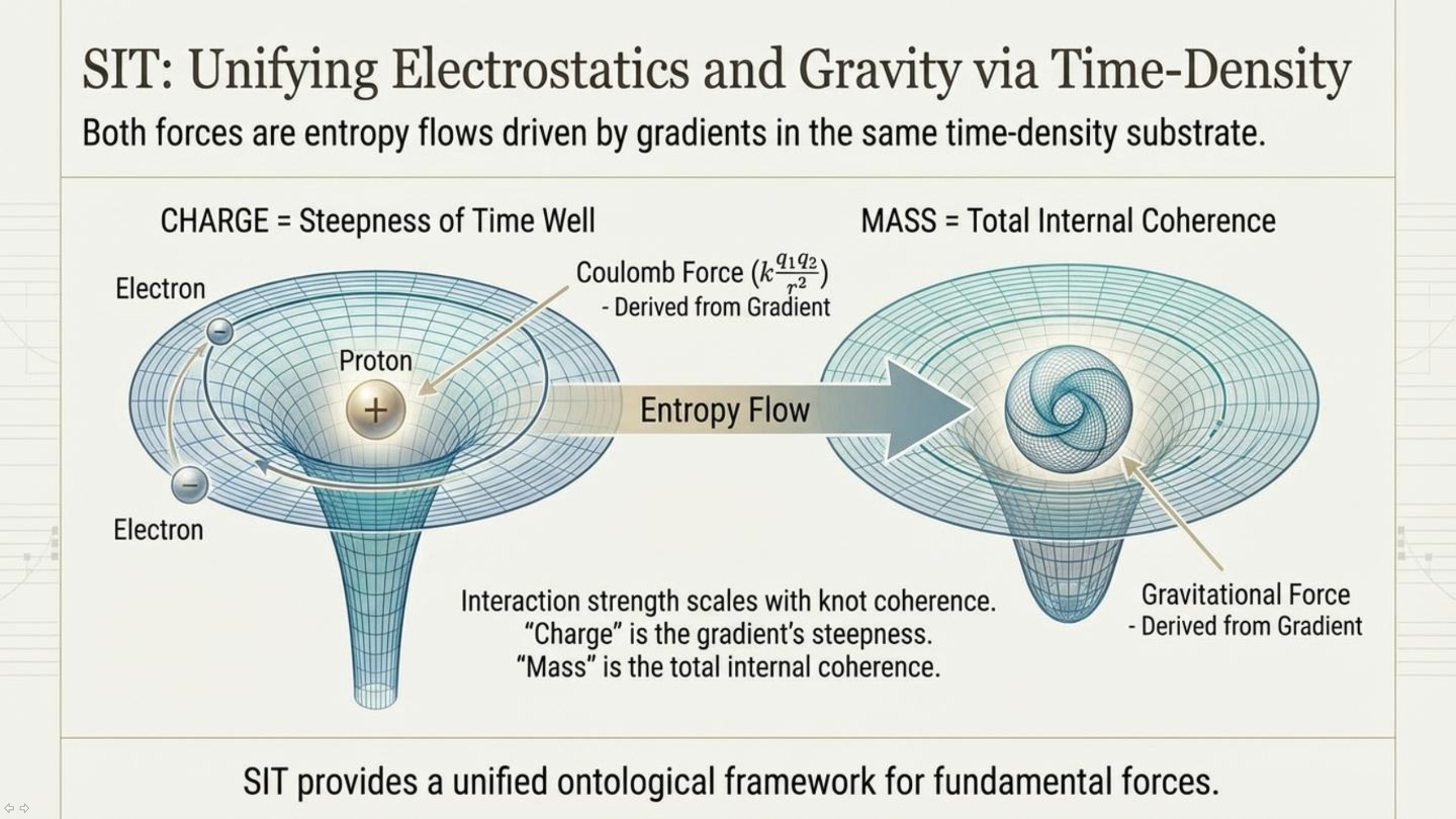
We didn’t input the Inverse-Square Law. We derived it. This implies that what we call “Electrostatics” is actually an entropic force caused by the geometry of time density.
The Proof of Quantization: Why the Electron Doesn’t Crash
The second challenge of the Hydrogen atom is stability. Why doesn’t the electron spiral into the nucleus? Bohr and Schrödinger solved this by inventing “Quantum Numbers” (n = 1, 2, 3...), but these were originally just arbitrary rules to make the math work.
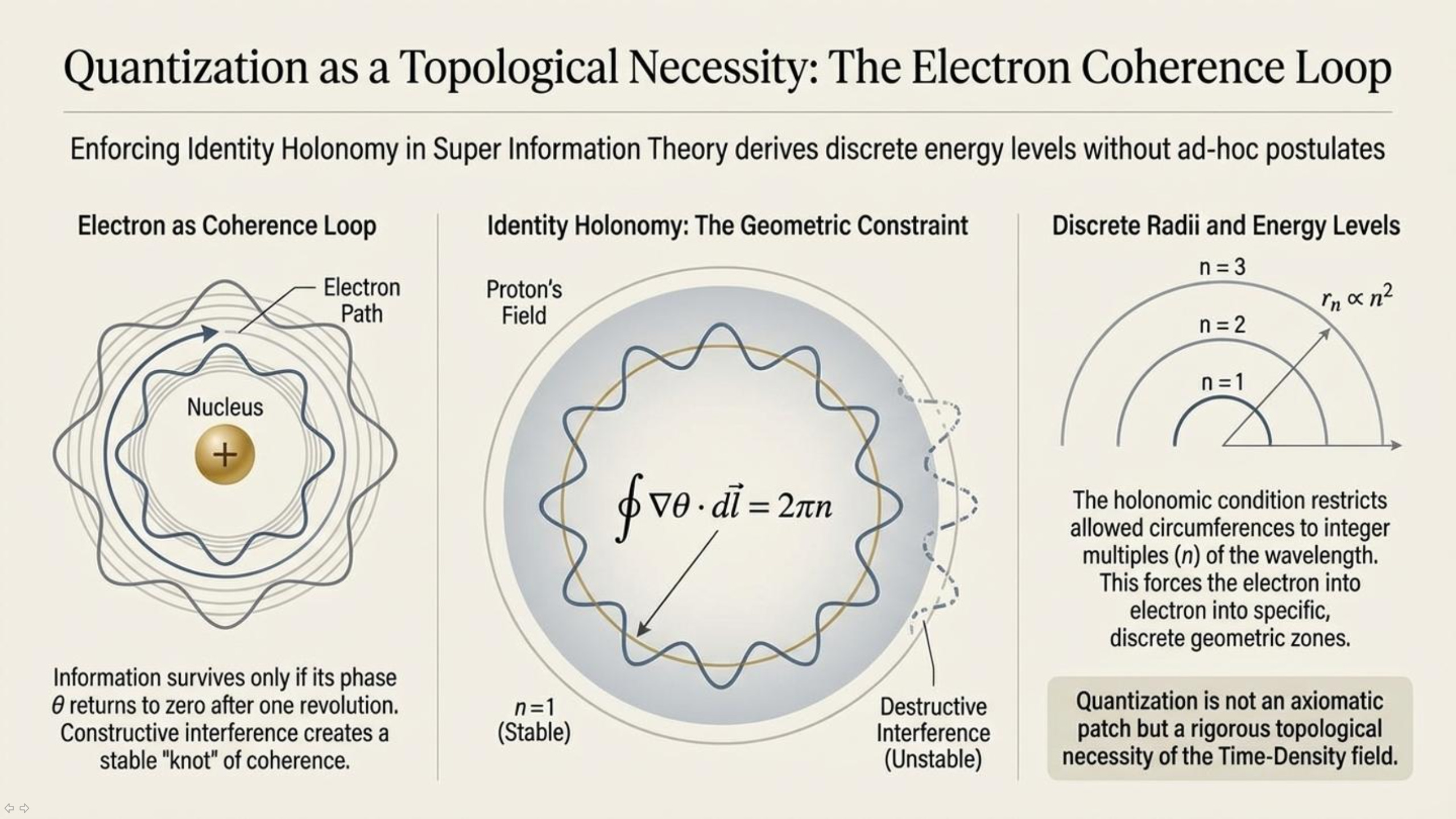
SIT provides the ontological reason. We derived the electron shells using Topological Holonomy.
Mass is Information (R꜀ₒₕ).
Information can only survive if it doesn’t destructively interfere with itself.
Therefore, an electron can only exist on a path where its internal phase “winds” perfectly back to zero.
We proved that the condition for this—Identity Holonomy (∮ ∇θ ⋅ dl = 2πn)—forces the electron to exist only at specific, discrete radii.
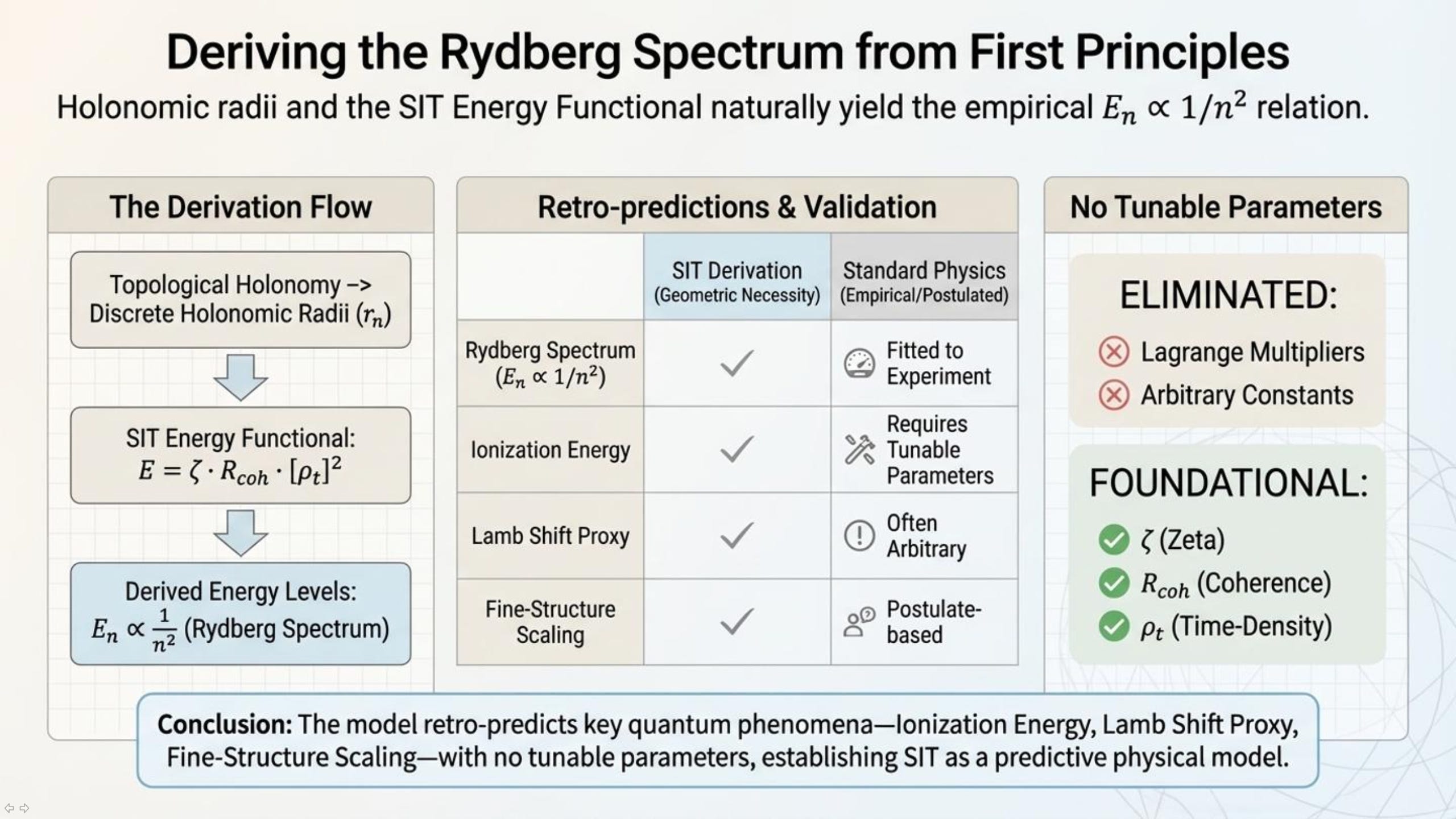
The “quantum jumps” between shells are not magic. They are the only geometric zones where information can survive without dissipating into the vacuum.
Why This Matters
This paper marks the transition of SIT from a theoretical framework to a predictive physical model. We have shown that if you start with just two fields—Coherence and Time-Density—you essentially get the structure of matter for free.
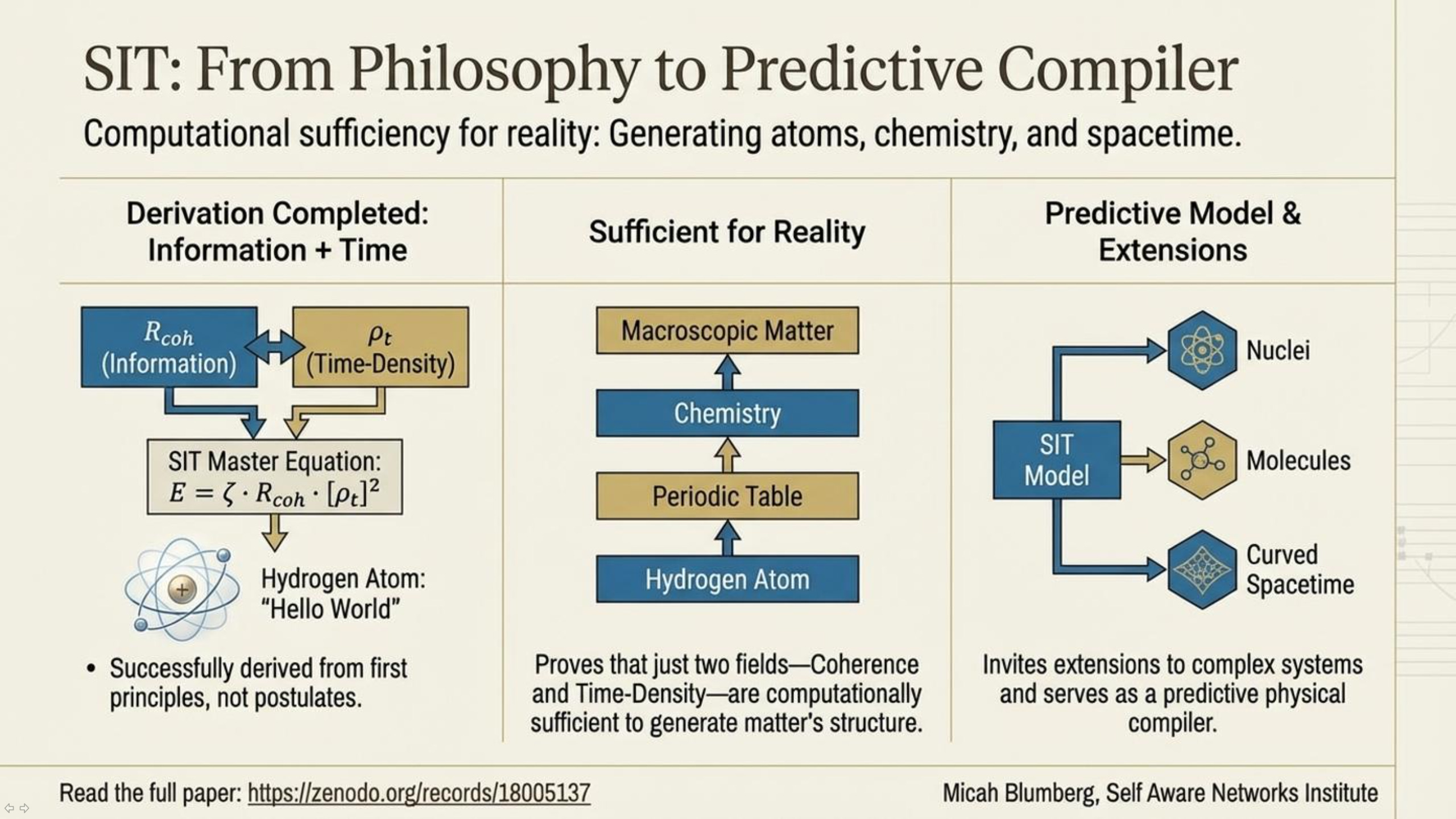
The Hydrogen atom is the “Hello World” of reality. SIT just compiled it successfully.
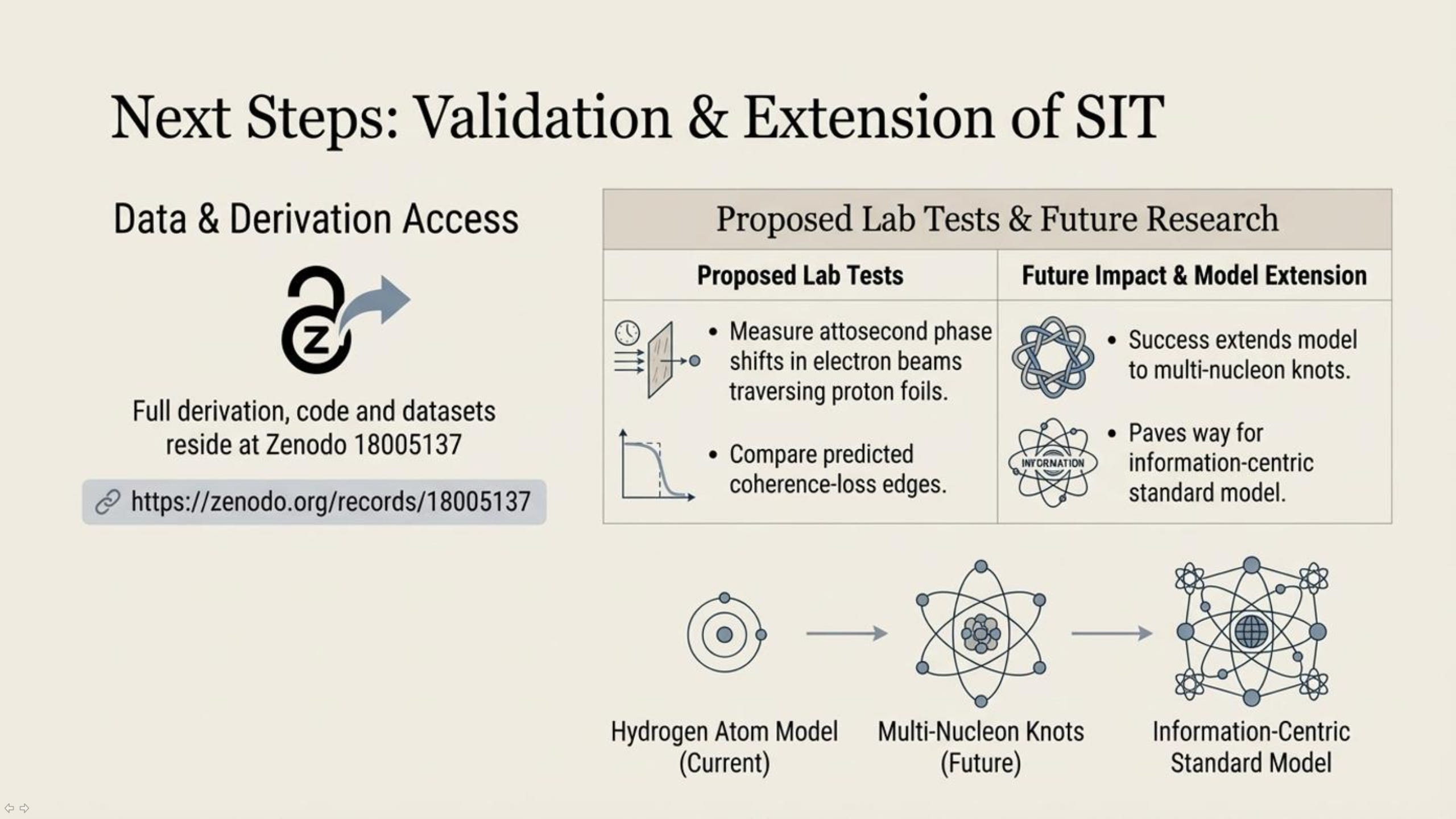
Read the full paper and the derivation here: https://zenodo.org/records/18005137
Learn about the history of the Super Information Theory Corpus
The History of the Super Information Theory Corpus.

Super Information Theory (SIT) emerged through a continuous sequence of conceptual
Read the latest update to the Super Information Theory core paper here:
Update: Super Information Theory v76 – Setting the Historical Record Straight

Science is a conversation, but it is also a timeline. Today, I am releasing Version 76 of Super Information Theory (SIT), a critical update that does more than just refine the physics—it audits the history.